By HammerCore Group Editorial Team · Updated 2026-07-13
A properly installed gutter system directs rainwater away from a home’s foundation, roof, and siding — preventing wood rot, erosion, and mold growth before they become costly structural problems. Knowing when to replace gutters versus repairing them early is the key decision homeowners face, and getting it right saves significant money over time. HammerCore Group serves Midwest clients with licensed, insured residential construction services built to protect homes long-term.
Gutters protect your home by directing rainwater away from foundations, roofs, and siding.
Two primary options exist for damaged gutters: targeted repairs or full system replacement.
Clogged or broken gutters cause at least 3 serious issues: wood rot, mold, and erosion.
Regular gutter maintenance prevents costly water damage repairs averaging thousands of dollars annually.
A properly functioning gutter installation protects a home’s structural integrity by directing rainwater away from the foundation, roof, and siding. Without that protection, water damage accumulates silently — and the repair bills follow loudly.
Rainwater running off a roof travels straight down to the soil surrounding the foundation. That water erodes the soil or seeps through it, pushing moisture into the foundation itself. Once dampness enters the foundation, it finds its way into the interior of the home. The damage compounds from there.
A well-installed gutter system delivers four core protections:
Foundation defense — diverts rainwater before erosion or seepage begins
Mold and mildew prevention — eliminates standing water that encourages microbial growth
Roof lifespan extension — blocks water intrusion that degrades roofing materials over time
Siding and landscaping protection — keeps runoff from saturating exterior surfaces
When gutters clog or pull away from the roofline, water pools against the fascia and overflows onto the foundation. Standing water creates the exact conditions that accelerate mold and mildew growth. Homeowners who delay gutter repair often face far costlier structural remediation later.
Water that backs up under roofing materials causes wood rot and weakens the decking beneath shingles. A properly installed gutter system channels water off the roof cleanly, extending the roof’s functional lifespan. Reducing the frequency of premature gutter replacement cycles.
Gutters fall into two primary categories — seamless gutters and sectional gutters. And both are manufactured from materials engineered to resist water damage. Aluminum and vinyl are the most common choices. Aluminum and steel dominate the seamless segment because both metals endure weather fluctuations more reliably than softer alternatives.
Sectional gutters arrive in pre-cut lengths that workers join together on-site. Every joint is a potential weak spot. Seamless gutters, by contrast, are continuous channels fabricated to match a structure’s exact dimensions. Fewer seams translate directly into fewer rust pockets and fewer failure points over the life of the system.
Feature | Seamless Gutters | Sectional Gutters |
|---|---|---|
Construction | Single continuous channel | Pre-cut sections joined on-site |
Weak points | Minimal — seams only at corners | Every joint is a potential leak point |
Common materials | Aluminum, steel | Aluminum, vinyl |
Weather resistance | Higher — built to endure weather changes | Moderate |
Gutters attach to the fascia board or rafter tails along the roofline, anchoring the entire drainage system to the structure. A secure attachment keeps the channel properly pitched so water flows toward downspouts rather than pooling. Improper fastening is one of the leading causes of sagging and separation. Accelerates the need for gutter repair or full gutter replacement.
Choosing the right type and material upfront reduces long-term maintenance demands. Homeowners weighing gutter installation options benefit from understanding these trade-offs before committing to a system. Because the wrong choice costs more to fix than it ever cost to prevent.
The repair-vs.-replace decision depends entirely on the extent of the damage — no single universal rule applies to every situation. Making the right call saves homeowners money. Prevents the kind of costly structural damage that escalates quickly when water finds its way to a foundation or roofline.
Gutters wear out over time, though their lifespan varies based on material and environmental factors. Gutter repair handles isolated problems before they spread. Gutter replacement becomes necessary when damage is widespread or the system has simply reached the end of its service life.
Several damage patterns point toward replacement rather than a patch job:
Widespread rust or corrosion across the system
Multiple failing seams that can no longer hold a seal
Persistent sagging across long runs of channel
Recurring leaks that return after repeated repairs
When damage affects the majority of a system, piecemeal fixes cost more over time than a single gutter replacement project.
Small holes and isolated cracks are classic candidates for repair. A minor hole does not justify tearing out an otherwise functional system. Targeted gutter repair resolves the issue at a fraction of the replacement cost. Catching these smaller problems early is exactly how homeowners avoid the larger expense down the road.
Damage Type | Recommended Action |
|---|---|
Small holes or cracks | Repair |
Single leaking joint | Repair |
Widespread rust or corrosion | Replace |
Persistent sagging across multiple sections | Replace |
Isolated section pulling from fascia | Repair or partial replacement |
Seamless gutters earn their popularity here. Seamless models last for decades with minimal issues because fewer seams mean fewer failure points. Sectional gutters, by contrast, develop joint problems more frequently, which shifts the repair-vs.-replace math earlier in their lifespan.
HammerCore Group’s demolition and construction expertise positions the team to assess structural conditions accurately. Giving property owners a grounded recommendation rather than a default upsell.
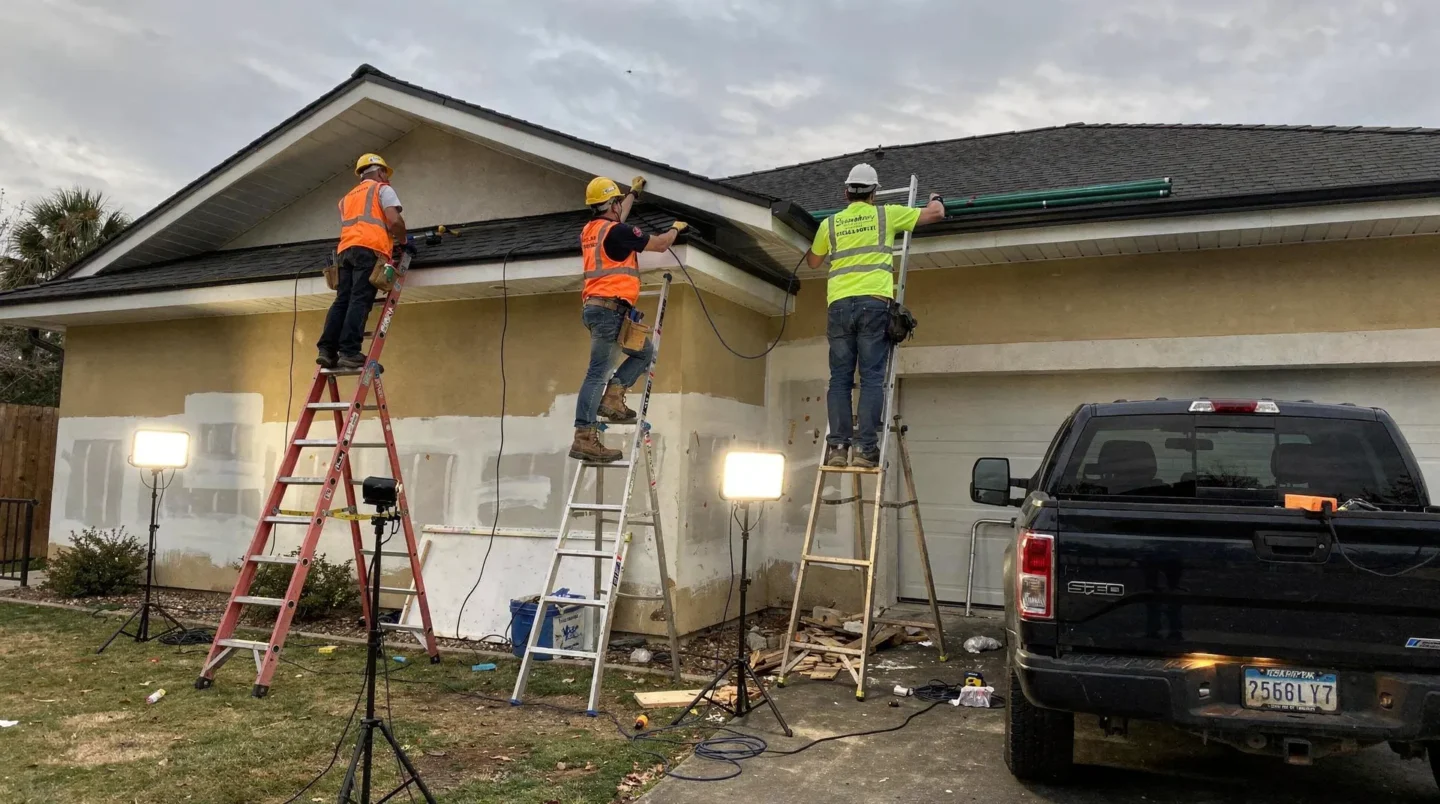
Gutter installation is the process of fitting a water-collection system along a roofline to channel rainwater away from a home’s foundation, siding, and structural framing. Skipping or delaying proper gutter repair leaves foundations vulnerable to erosion, wood rot, and mold — damage that costs far more to fix than the gutters themselves.
A rain gutter system collects runoff from the roof. Redirects it away from the house, directly improving the building’s long-term structural health. That single function protects multiple systems at once: the foundation, the fascia boards, and the landscaping around the perimeter.
Seamless gutters are fabricated in one continuous run, which eliminates most of the joints where leaks typically start. Sectional gutters are assembled from pre-cut lengths joined at seams, making them easier to install in sections but more prone to separation over time. Homeowners weighing gutter replacement should consider both durability and long-term maintenance when choosing between the two types.
Feature | Seamless Gutters | Sectional Gutters |
|---|---|---|
Leak risk | Lower — fewer joints | Higher — seams can separate |
Common damage | Dents, small tears, section separation | Joint leaks, sagging sections |
Maintenance frequency | Generally lower | Generally higher |
Even seamless models sustain damage. Hail impacts and fallen branches cause dents, small tears, and section separation. All of which require prompt attention to prevent water intrusion.
Professional technicians often complete minor repairs before a cleaning service. First inspecting the system’s U-shaped or K-shaped traps for blockages and structural wear. Catching small issues at that stage prevents them from escalating into full gutter replacement projects.
Gutter installation cost and repair scope both depend heavily on the system’s size, material, and condition at the time of service — so an accurate assessment requires an on-site inspection rather than a general estimate. HammerCore Group, a licensed and insured contractor serving residential and commercial clients across Wisconsin, Illinois, Iowa, Minnesota, and Indiana, provides free quotes to help property owners understand the full scope before any work begins.

Choosing the right gutter contractor protects a home from costly water damage and avoids rework expenses down the road. The strongest contractors combine quality workmanship, clear communication. Verified licensing — three factors that separate reliable crews from risky ones.
Any reputable gutter contractor should carry:
Valid licensing — confirms the contractor meets professional and legal standards
Full insurance coverage — protects homeowners from liability for on-site injuries and property damage
A contractor without both exposes homeowners to serious risk before a single ladder goes up.
Customer reviews reveal patterns that credentials alone cannot. Homeowners should look for consistent praise around responsiveness, professionalism, and efficient project completion. The markers that separate contractors who deliver from those who disappear mid-job.
Use this checklist when vetting candidates:
Licensed and insured — confirms legal accountability
Clear, proactive communication throughout the project
Documented history of professional, on-time work
Free, written quotes before any work begins
HammerCore Group demonstrates these qualities across gutter installation, gutter repair, and gutter replacement projects in the Midwest. The company is licensed and insured, emphasizes quality workmanship and transparent communication. Offers free quotes so clients understand gutter installation cost expectations before committing. Past customers describe the team as professional, responsive, and efficient. Exactly the track record worth prioritizing when evaluating any contractor.
Don’t wait for water damage to compound — call HammerCore Group today at 262-398-0046 to speak with a licensed, insured contractor and get a free quote on gutter installation, repair, or replacement.
Gutters direct rainwater away from the foundation, preventing soil erosion. Moisture seepage that silently compound into costly structural damage over time.
Failed gutters cause at least three serious issues:
Wood rot — moisture saturates fascia boards and structural framing
Mold growth — standing water creates ideal conditions for microbial spread
Erosion — uncontrolled runoff strips soil away from the foundation
All of which lead to expensive structural repairs if left unaddressed.
Gutters fall into two primary categories: sectional gutters, joined on-site with potential weak points at every seam. Seamless gutters, which run as one continuous piece.