By HammerCore Group Editorial Team · Updated 2026-07-13
A deck takes a beating — rotting boards, loose railings, weather damage, and materials that were never built to last. Left alone, those small problems quietly grow into structural failures that cost far more to fix. HammerCore Group handles every stage of the work, from targeted repairs to full teardowns and new builds, as a licensed and insured contractor serving homeowners across the Midwest. Every project gets the same straight-forward communication and dependable execution, from the first phone call to the final walkthrough.
Deck installation and repair cover a wide range of structural and cosmetic work, all aimed at keeping an outdoor living space safe and functional. A deck is a genuine extension of a home — a place to relax, host gatherings, and get outside — and when the boards start to go or the railings wobble, that space becomes a safety concern worth taking seriously. Repair work homes in on specific failure points, while a full installation or replacement starts fresh with new materials and a clean design:
Most contractors offer two main material paths: wood deck repair and composite deck installation. Wood brings a classic, natural look that a lot of homeowners still prefer, and it responds well to targeted repairs when damage is caught early. Composite holds up better against moisture and requires far less ongoing maintenance — a practical long-term choice for anyone who wants a durable deck without the yearly upkeep.
Common deck material types at a glance:
| Material Type | Key Characteristic |
|---|---|
| Wood | Natural appearance, traditional feel |
| Composite | High durability, lower maintenance demand |
A licensed and insured contractor handles the full spectrum — from a targeted repair on a single damaged section to a complete tear-out and rebuild. HammerCore Group serves residential clients across the Midwest and brings that same level of accountability to every deck project, no matter the scope.
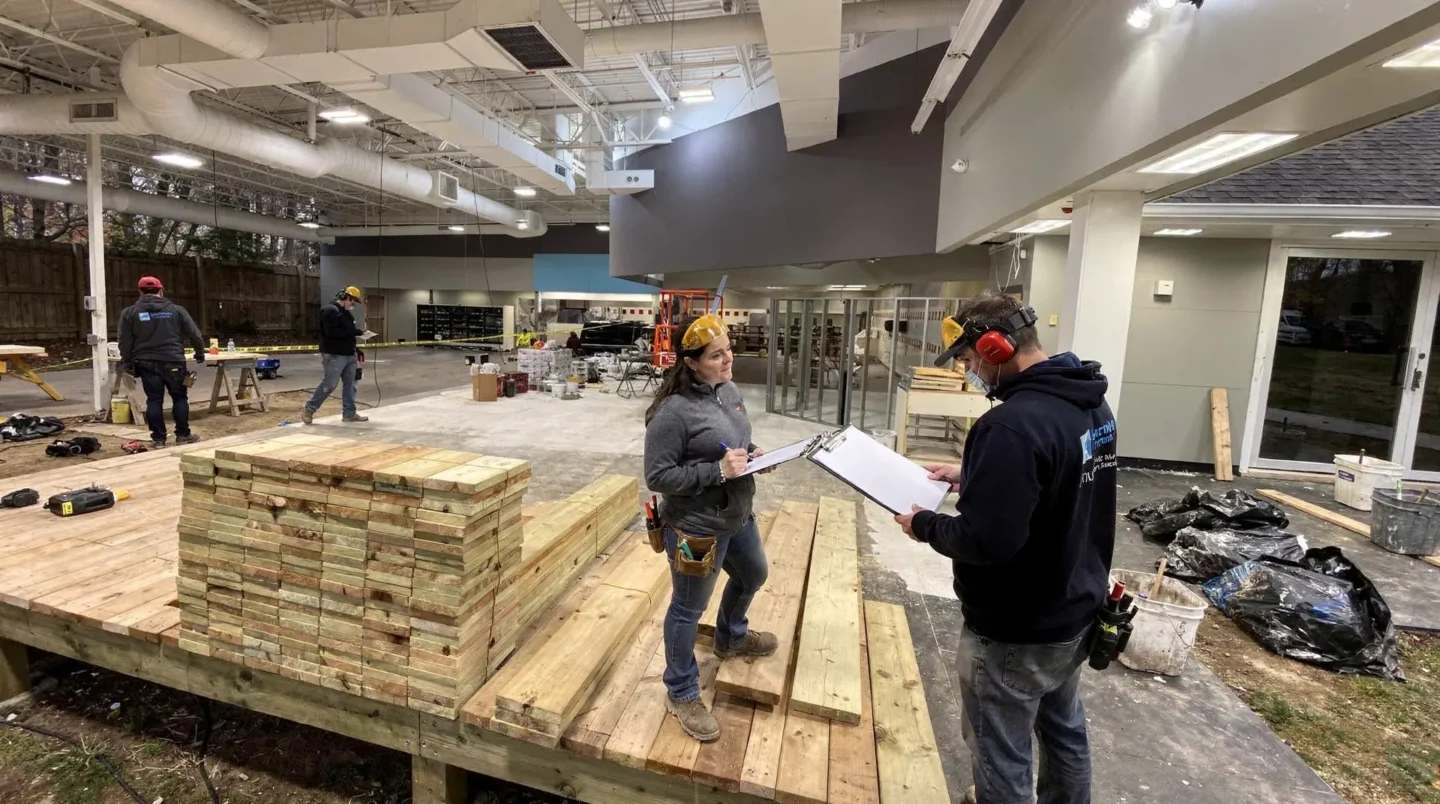
Picking the right deck contractor comes down to two things: verified credentials and honest communication — and both need to be confirmed before a single board gets touched. Homeowners who skip that vetting step put themselves at risk for costly delays, substandard results, and real legal exposure if the crew isn’t properly licensed.
The baseline for any reputable deck contractor is straightforward: licensed, bonded, and insured. Those credentials protect homeowners if a worker is injured on the property or if structural work fails inspection. Contractors who also manage permits, HOA requirements, and inspections on the homeowner’s behalf take a real load off — and that’s the kind of detail that separates a full-service professional from a basic labor-only outfit.
Reliability shows itself before the first board is ever cut. Professional responsiveness — returning calls promptly, providing clear timelines, and keeping clients in the loop at every stage — is one of the strongest early signals of how a project will actually run. A smooth process from initial quote to final walkthrough reflects genuine quality workmanship, not just a polished sales pitch.
Key criteria to evaluate when comparing deck contractors:
HammerCore Group brings licensed, insured construction services to every project — backed by a real commitment to responsive communication and results that hold up.
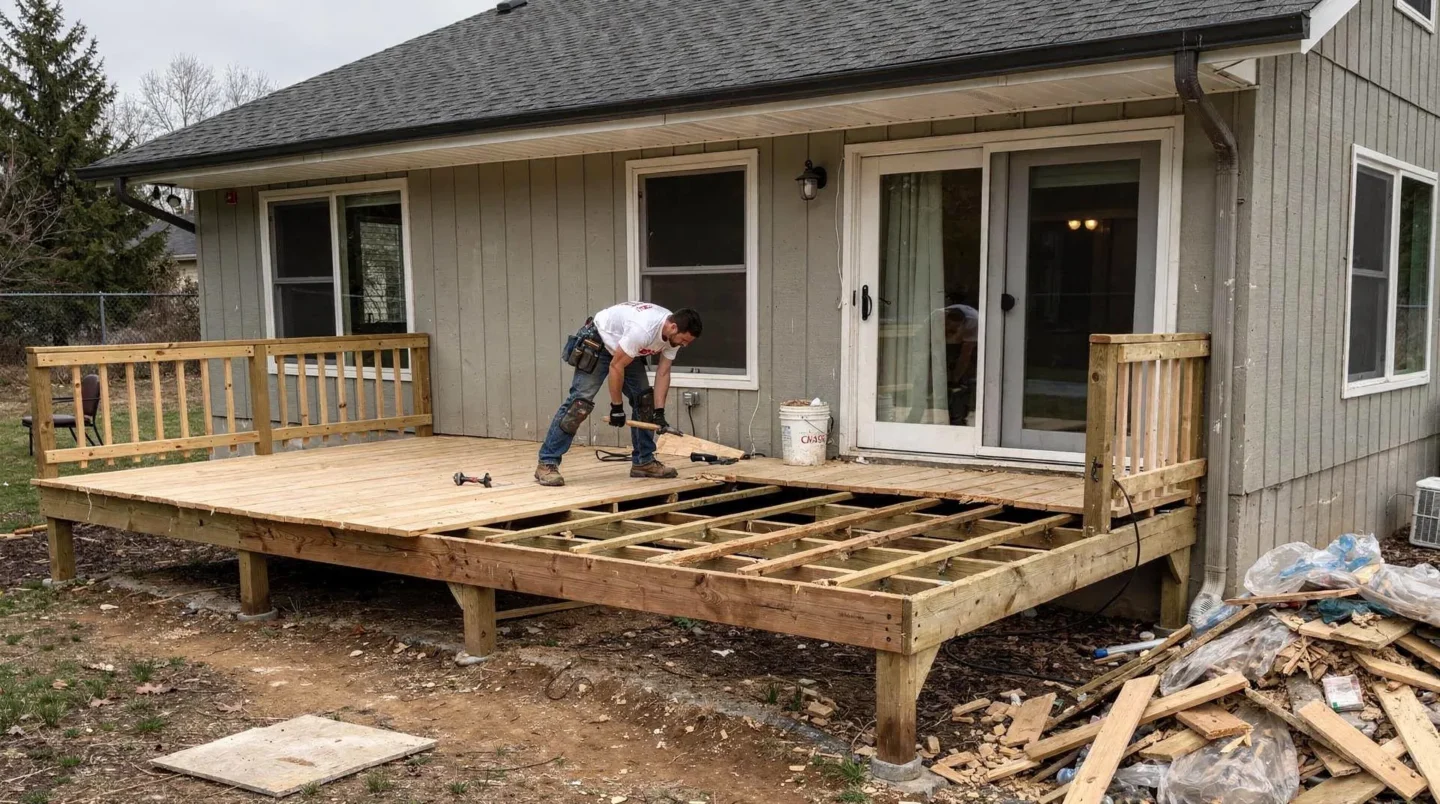
Homeowners who’ve never had a deck built often don’t know what to expect once a contractor is hired. The process follows a predictable sequence — and understanding it helps avoid surprises on timeline, site access, and budget.
The contractor evaluates the property: ground conditions, access points, how the deck will connect to the house, and any grading issues that affect drainage. This shapes the design and material recommendations before a single measurement is committed to paper.
Most deck builds require a building permit, and properties governed by an HOA often need separate design approval. A full-service contractor handles both — pulling permits, submitting plans, and coordinating inspections so homeowners don’t have to navigate municipal offices themselves.
The ground beneath the deck footprint is cleared and graded. Footings — the concrete piers that anchor the posts — are dug and poured to the depth required by local frost line codes. In the Midwest, that typically means going deeper than builders in warmer climates to prevent frost heave from destabilizing the structure over time.
Ledger boards, posts, beams, and joists go in first — the skeleton that carries all the load. This is the phase where licensing matters most: improper framing is the root cause of the majority of deck failures, and a licensed contractor follows code-compliant spans, fastener schedules, and connection details that an unlicensed crew may skip.
Boards are laid, fastened, and spaced for drainage. Railings and balusters are installed to code height and spacing requirements. Stairs are framed, stringers are cut, and treads are attached — each a structural element that needs to meet load ratings, not just look right.
The permit closes with a final inspection by the local building authority. Once it passes, the contractor walks the homeowner through the completed deck — reviewing the finished work, flagging any care or maintenance notes, and confirming the site is clean and clear.
Homeowners who’ve never had a deck built often don’t know what to expect once a contractor is hired. The process follows a predictable sequence — and understanding it helps avoid surprises on timeline, site access, and budget.
The contractor evaluates the property: ground conditions, access points, how the deck will connect to the house, and any grading issues that affect drainage. This shapes the design and material recommendations before a single measurement is committed to paper.
Most deck builds require a building permit, and properties governed by an HOA often need separate design approval. A full-service contractor handles both — pulling permits, submitting plans, and coordinating inspections so homeowners don’t have to navigate municipal offices themselves.
The ground beneath the deck footprint is cleared and graded. Footings — the concrete piers that anchor the posts — are dug and poured to the depth required by local frost line codes. In the Midwest, that typically means going deeper than builders in warmer climates to prevent frost heave from destabilizing the structure over time.
Ledger boards, posts, beams, and joists go in first — the skeleton that carries all the load. This is the phase where licensing matters most: improper framing is the root cause of the majority of deck failures, and a licensed contractor follows code-compliant spans, fastener schedules, and connection details that an unlicensed crew may skip.
Boards are laid, fastened, and spaced for drainage. Railings and balusters are installed to code height and spacing requirements. Stairs are framed, stringers are cut, and treads are attached — each a structural element that needs to meet load ratings, not just look right.
The permit closes with a final inspection by the local building authority. Once it passes, the contractor walks the homeowner through the completed deck — reviewing the finished work, flagging any care or maintenance notes, and confirming the site is clean and clear.
Homeowners who’ve never had a deck built often don’t know what to expect once a contractor is hired. The process follows a predictable sequence — and understanding it helps avoid surprises on timeline, site access, and budget.
The contractor evaluates the property: ground conditions, access points, how the deck will connect to the house, and any grading issues that affect drainage. This shapes the design and material recommendations before a single measurement is committed to paper.
Most deck builds require a building permit, and properties governed by an HOA often need separate design approval. A full-service contractor handles both — pulling permits, submitting plans, and coordinating inspections so homeowners don’t have to navigate municipal offices themselves.
The ground beneath the deck footprint is cleared and graded. Footings — the concrete piers that anchor the posts — are dug and poured to the depth required by local frost line codes. In the Midwest, that typically means going deeper than builders in warmer climates to prevent frost heave from destabilizing the structure over time.
Ledger boards, posts, beams, and joists go in first — the skeleton that carries all the load. This is the phase where licensing matters most: improper framing is the root cause of the majority of deck failures, and a licensed contractor follows code-compliant spans, fastener schedules, and connection details that an unlicensed crew may skip.
Boards are laid, fastened, and spaced for drainage. Railings and balusters are installed to code height and spacing requirements. Stairs are framed, stringers are cut, and treads are attached — each a structural element that needs to meet load ratings, not just look right.
The permit closes with a final inspection by the local building authority. Once it passes, the contractor walks the homeowner through the completed deck — reviewing the finished work, flagging any care or maintenance notes, and confirming the site is clean and clear.
Deck condition determines the right course of action — and getting it wrong costs homeowners time, money, and safety. Weather exposure and everyday use wear a deck down gradually, quietly compromising both appearance and structural integrity. Repair is the right move for isolated damage — a few rotting boards, loose railings, or surface weathering that hasn’t gone deep; selective demolition removes only the problem areas precisely, without disturbing the sound framing around them. When damage is widespread, structural members are compromised, or the existing layout no longer works for the property, full teardown is the better answer — everything comes out from start to finish, including thorough site cleanup, so new construction starts on a genuinely clean slate.
When rot, instability, or weather damage reaches the load-bearing posts, beams, and ledger boards, repair costs often approach — or outright exceed — the deck replacement cost. At that point, a full teardown and rebuild delivers better long-term value.
HammerCore Group handles exactly this kind of combined scope — managing shed demolition alongside a bathroom remodel efficiently and smoothly within a single project. Working with one team through both phases means no handoff delays and no coordination headaches between removal and rebuild.
| Scenario | Recommended Approach |
|---|---|
| Isolated board or railing damage | Selective demolition + repair |
| Widespread structural compromise | Full teardown + new build |
| Outdated layout, sound structure | Selective demolition + redesign |
The right approach makes all the difference in safety, longevity, and curb appeal — whether the job calls for:
HammerCore Group brings the same licensed, insured expertise to every deck project — precise execution, clean job sites, and results built to last. A well-built deck isn’t just an outdoor space; it’s a long-term investment in the property worth protecting.
Whether the deck needs a targeted repair or a full replacement, HammerCore Group is ready to help. As a licensed and insured contractor serving homeowners across the Midwest, the team brings dependable execution and clear communication to every project — from the first call to the final walkthrough.
Call today to discuss the project and get a quote: 262-398-0046
Deck repair tackles the most common failure points — rotting boards, loose railings, unstable stairs, and weather damage — before they escalate into costly structural problems.
Contractors offer wood decking for a natural, traditional appearance and composite decking for high durability and lower maintenance demand over the long term.
HammerCore Group is a licensed, insured contractor serving residential clients across the Midwest — covering everything from targeted section repairs to complete tear-out and rebuild projects.
Timeline varies by scope and complexity, but most residential deck builds run one to two weeks from site preparation through final inspection. Factors like permit approval timelines, material lead times, and weather can affect the schedule — a reliable contractor will provide a clear timeline upfront and keep homeowners informed at every stage.
In most jurisdictions, yes — any new deck build or full replacement requires a building permit, and some repairs that affect structural members may also require one. A licensed contractor handles permit applications, plan submissions, and final inspections as part of the project, so homeowners don’t have to manage that process themselves.