Building Construction
By HammerCore Group Editorial Team · Updated 2026-07-21
Midwest general contractors that promise complete construction services typically cover the whole job, from pre-construction planning and design-build through renovation and post-construction support, across states like Wisconsin, Illinois, Minnesota, Iowa, and Indiana. Large names such as Turner Construction and a range of established regional firms all work within that same broad scope.
Across the Midwest, complete construction services usually mean demolition, remodeling, and general contracting handled by one licensed and insured provider. HammerCore Group serves the region from its base in Elm Grove, WI, taking on ground-up builds and tenant improvements with experienced crews, free quotes, and job sites held to strict safety standards, so every project comes in safe and built to last.
“Complete” construction coverage means something different at every contractor. For some, it’s full project lifecycle management; for others, it’s a short list of home upgrades. That gap matters a great deal when a Midwest developer is choosing a partner for a ground-up build or tenant improvement.
Full-service Midwest contractors tend to describe their scope as running from initial design and planning all the way through final execution and delivery. That end-to-end model works well for owners who want one accountable partner across the whole timeline, rather than a patchwork of subcontractors to manage.
Other firms use “complete” more narrowly. Some Midwest home improvement companies apply the term to specific upgrades, like roofing, siding, gutters, and windows, rather than structural work. Regional contracting outfits take yet another angle, specializing in foundation drilling, concrete paving, and general contracting for larger infrastructure-adjacent projects.
No, it doesn’t. The label varies by business model, so owners should confirm exactly which phases and trades a contractor’s “complete” package includes before signing a contract.
| Contractor Type | Typical “Complete” Scope |
|---|---|
| Full-service commercial builder | Design, planning, execution, delivery |
| Home improvement company | Roofing, siding, gutters, windows |
| Regional contracting firm | Foundation drilling, concrete paving, general contracting |
| Demolition and construction contractor | Site clearing plus residential or commercial construction rebuild |
HammerCore Group fits that last category, working as a licensed and insured demolition and construction contractor for residential, commercial, and industrial clients across Wisconsin, Illinois, Iowa, Minnesota, and Indiana. That combination gives Midwest owners the construction services Midwest projects need at every stage, from teardown through new build construction, without having to juggle separate vendors for demolition and rebuilding.

A qualified general contractor with a documented track record should lead any ground-up build across the Midwest. Pick the wrong team, and owners and developers risk missed deadlines, budget overruns, and safety violations that can stall occupancy for months.
Contractors positioned for new build construction tend to emphasize a founding commitment to meeting or exceeding client expectations, and that’s a standard worth confirming before signing any agreement. Regional Midwest firms often state their mission plainly: complete projects on time, within budget, and safely. That three-part standard gives developers a simple benchmark for evaluating proposals.
Developers evaluating construction services from Midwest providers should prioritize firms that pair site-clearing capability with disciplined project management. A full teardown that clears a site completely, cleanup included, prepares a lot properly for new construction and heads off delays caused by leftover debris or unstable ground.
Coordinating demolition and building under one contractor closes the scheduling gaps that tend to open up between phases. A single accountable team also makes communication easier for owners managing residential and commercial construction projects with multiple stakeholders.
Before hiring, developers should confirm the contractor offers:
Many Midwest home improvement companies provide free estimates before starting work, and commercial owners should expect nothing less as standard due diligence. Requesting a written estimate up front protects budget projections and gives developers leverage when comparing multiple bids for the same site.

Ground-up projects and tenant improvements call for different demolition strategies across the Midwest. A new build construction project usually starts with a full site clear, while a tenant improvement calls for careful, targeted removal inside an occupied building.
Owners and developers evaluating a project should match the scope to the right service before requesting bids.
Ground-up projects in the Midwest generally require complete demolition of existing structures before construction services Midwest teams break ground on the new build. Commercial demolition handles offices, retail spaces, and other commercial properties undergoing renovation or full repositioning. Full-service contractors talk about guiding a project from concept through completion, and that guidance matters most on new builds, where a sequencing error can get costly fast.
Tenant improvement work rarely justifies tearing down an entire structure. Selective demolition removes only specific areas of a building while protecting everything around it, which comes up often when one tenant space changes hands but the neighboring units stay open for business. Interior demolition delivers clean tear-outs for remodels, renovations, and build-outs, clearing the way for new fit-outs without disturbing the shell.
| Project Type | Typical Need | Matching Service |
|---|---|---|
| Ground-up new build | Full site clearing | Commercial demolition |
| Tenant improvement | Space-specific removal | Selective demolition |
| Remodel or build-out | Clean interior tear-out | Interior demolition |
Business operators managing residential commercial construction portfolios across the Midwest should scope demolition needs early. Matching the right demolition service to the project type protects budgets, timelines, and neighboring tenants alike.
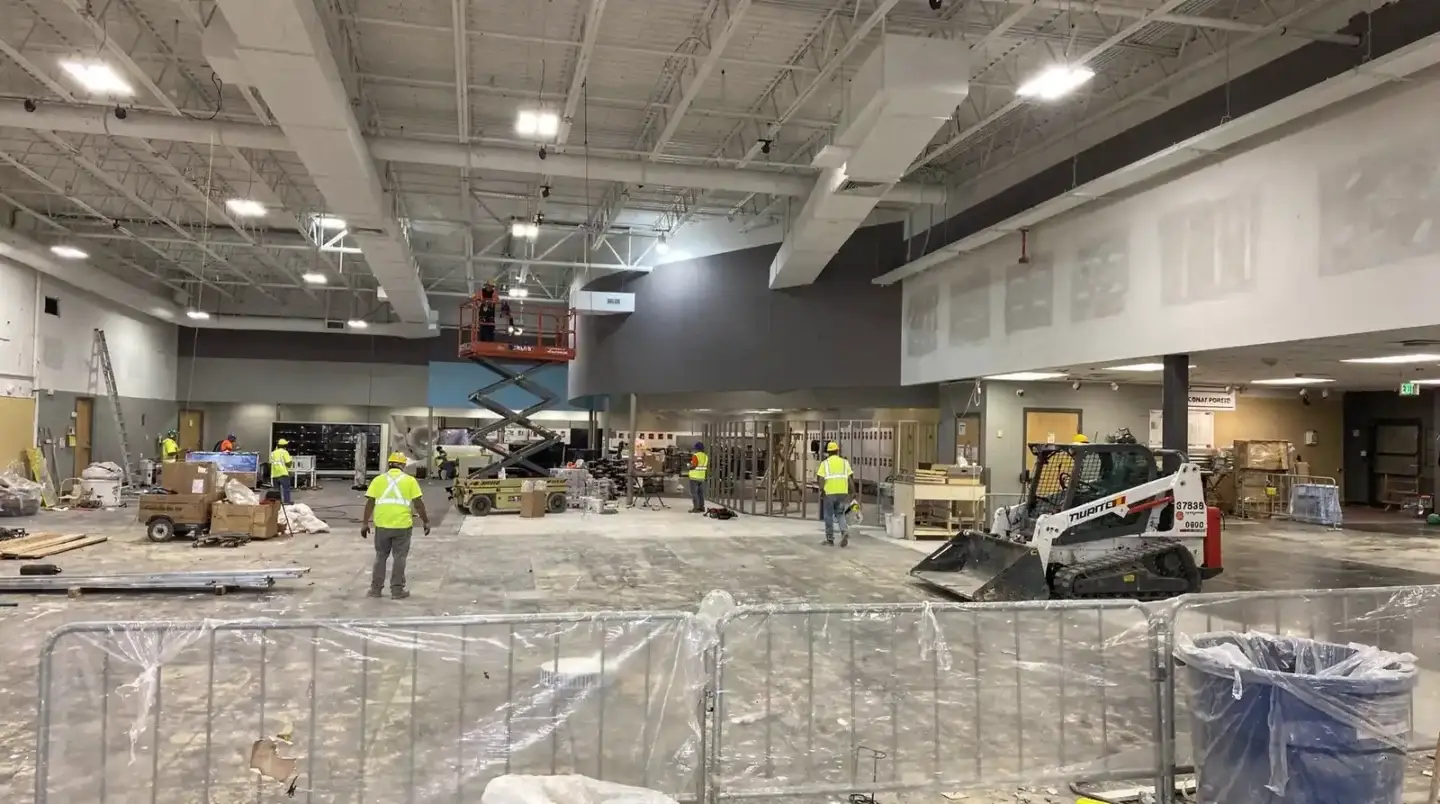
Residential and commercial scopes differ mainly in scale, regulatory complexity, and safety planning. A single-family teardown in a Midwest neighborhood carries different structural and permitting demands than a multi-tenant retail demolition in a business corridor. Both require licensed oversight, but the risk profile and equipment needs shift significantly between the two.
Construction services midwest providers structure their scopes around the client. HammerCore Group serves residential, commercial, and industrial clients across Wisconsin, Illinois, Iowa, Minnesota, and Indiana, adjusting crew size and equipment to match the property involved. That multi-state reach matters for developers managing projects across several jurisdictions at once.
Job site safety planning changes first. Licensed and insured contractors treat a safe job site as a top priority regardless of property type, but commercial sites often involve occupied businesses, public foot traffic, and tighter liability exposure. Residential sites, by contrast, focus more on protecting neighboring structures and managing debris in tighter lots.
Larger commercial and residential commercial construction scopes demand deeper team experience. Established Midwest home improvement companies often point to decades of combined staff experience and over ten years serving their local region as proof they can handle varied project sizes. cite-5
Consider how scope elements typically diverge:
Whether residential or commercial, new build construction projects all benefit from this same disciplined, safety-first approach from day one.
Four questions separate qualified contractors from risky hires: licensing status, safety record, quote practices, and service area. Commercial real estate owners and developers evaluating a general contractor for a new build construction or tenant improvement project deserve clear answers before signing anything.
Verifying licensing and insurance is the baseline screening step for any construction services midwest project. Reputable Midwest demolition and construction contractors, HammerCore Group among them, back up their licensed and insured status with a real emphasis on quality workmanship and clear communication. Skip this check, and a developer risks liability exposure on a multi-million-dollar build.
Safety performance shows how a contractor manages risk on active job sites. Some Midwest contractors publicly commit to zero-accident, zero-injury goals, building their work tasks around minimizing or eliminating hazards to personnel and property. Operators should ask for that commitment in writing before a project breaks ground.
Beyond safety and licensing, decision-makers should confirm pricing transparency and geographic reach. Here’s what to look for:
Owners who check these four areas before signing cut down on budget surprises and project delays.
HammerCore Group is ready to handle your complete construction needs across the Midwest. From initial demolition through final construction, our licensed and insured team delivers safe job sites and structures built to last. Whether your project involves residential demolition, commercial work, or comprehensive construction services, we bring the same expertise and commitment to every phase. Reach out for a free quote and let us help bring your vision to life.
The definition varies by contractor, ranging from full project lifecycle management—design through delivery—to a narrow list of home upgrades like roofing, siding, gutters, and windows.
HammerCore Group operates as a licensed and insured demolition and construction contractor across Wisconsin, Illinois, Iowa, Minnesota, and Indiana, based in Elm Grove, WI.
A qualified general contractor with a documented track record should lead any ground-up build. Choosing the wrong team risks missed deadlines, budget overruns, and safety violations.