

Safe residential demolition in Wisconsin requires licensed, insured contractors who follow DNR environmental rules, including fugitive dust control in Wisconsin. HammerCore Group serves Wisconsin homeowners with safe project execution, reliable workmanship, and clear communication. Property owners should verify credentials and safety protocols before any teardown begins, ensuring compliance with state regulations throughout the process.
Key Takeaways
- Licensed, insured contractors follow Wisconsin DNR environmental rules, including fugitive dust control, for safe residential demolition.
- Full teardowns, selective demolition, and interior demolition each require distinct safety approaches tailored to project needs.
- Site surveys identify asbestos, lead paint, and structural weaknesses before utility disconnections and controlled drop zones are established.
- Permits and utility shutoffs must be confirmed before demolition equipment arrives, preventing fines, shutdowns, and safety hazards.
What Are the Safest Residential Demolition Methods in Wisconsin?
The safest residential demolition methods in Wisconsin combine the right technique with strict regulatory compliance. Full teardowns, selective demolition in Wisconsin, and interior demolition safety practices each address different project needs while prioritizing worker and property protection.
How do full teardowns, selective demolition, and interior demolition differ?
Residential demolition services in Wisconsin include full teardowns, selective demolition, and interior demolition tailored to project needs. A full teardown removes an entire structure down to the foundation. Selective demolition targets specific sections, such as a failing addition or damaged wing, while preserving the rest of the home. Interior demolition strips rooms to the studs for major renovations. Each method demands its own safety approach.
Safe residential demolition methods start with a licensed demolition contractor in Wisconsin. Choosing a licensed demolition contractor in Wisconsin ensures compliance with safety and local regulatory requirements. Unlicensed work exposes property owners to fines, structural failures, and liability for injuries. HammerCore Group USA operates as a licensed and insured demolition contractor, giving Wisconsin homeowners documented accountability from the first assessment.
What safety protocols protect a Wisconsin demolition site?
Safety protocols and OSHA compliance are critical to any residential demolition project. The process begins with a thorough site survey to identify asbestos, lead paint, and structural weaknesses. Utility disconnections follow. Gas, electric, water, and sewer lines must be confirmed dead before any demolition work starts. Crews then establish controlled drop zones and dust suppression measures. Wisconsin’s Department of Natural Resources enforces fugitive dust control, requiring contractors to prevent particulate matter from becoming a noticeable source of air pollution.
Structural stability monitoring continues throughout the project. Load-bearing walls stay braced until the final phase. Debris is sorted for recycling or disposal according to state environmental requirements. HammerCore Group follows these protocols on every job, from garage removals to full home teardowns. Homeowners seeking safe demolition services for homes in Wisconsin receive a documented safety plan before work begins.

What Permits and Utility Disconnections Do You Need First?
Securing permits and scheduling utility disconnections are mandatory first steps before any residential demolition begins in Wisconsin. HammerCore Group offers a range of demolition, construction, and remodeling services, including residential and commercial demolition, interior and exterior remodeling, structural rebuilds, and site preparation. Skipping either step invites fines, project shutdowns, and serious safety hazards that homeowners cannot afford.
Wisconsin landowners and construction crews must comply with environmental requirements that govern demolition activities, according to the Wisconsin DNR. Local authorities enforce these rules through the permitting process. Without approved permits, no structure removal can legally proceed. The required approvals vary by municipality across Southeastern Wisconsin, but every jurisdiction demands documentation before work starts.
Safe residential demolition methods depend on a site that is fully disconnected from power, water, and gas lines. Utility disconnection is a standard part of the pre-demolition workflow. The sequence is non-negotiable: permits come first, then utility shutoffs are scheduled, and only after both are confirmed does demolition equipment arrive on site.
Who obtains the demolition permit in Wisconsin?
A professional contractor handles the permitting process so homeowners avoid regulatory delays. The company gathers all documentation, submits applications to the correct municipal office, and tracks approval status until permits are issued. Homeowners who attempt this alone often miss required forms or underestimate review timelines.
How long do utility disconnections take before demolition?
Response times vary by utility provider, and scheduling early prevents the most common project delay. Gas service requires a scheduled appointment with the local utility. Electric and water shutoffs may need coordination with multiple entities. Waiting on a utility crew while the demolition crew stands idle costs homeowners time and money on every project.
How Do You Control Dust and Debris on a Wisconsin Job Site?
Controlling dust and debris on a Wisconsin demolition site starts with understanding state environmental regulations. The Wisconsin DNR defines fugitive dust as any particulate matter released through means other than a stack or duct. Any business creating enough dust to become a noticeable source of air pollution must control those emissions. Failure to comply risks fines and project shutdowns.
HammerCore Group USA maintains safe job sites as a core part of its demolition service. The company integrates dust suppression directly into every project plan. This approach protects workers, neighbors, and the surrounding property.
What Activities Create Fugitive Dust on a Demolition Site?
Several common demolition activities generate fugitive dust. Large trucks transporting materials along unpaved roads kick up significant particulate clouds. Piles of dry materials stored on site also release dust when wind blows across them. Mechanical demolition of drywall, concrete, and wood framing adds to the airborne load. Each of these sources requires a specific control method.
How Do Professionals Suppress Dust During Demolition?
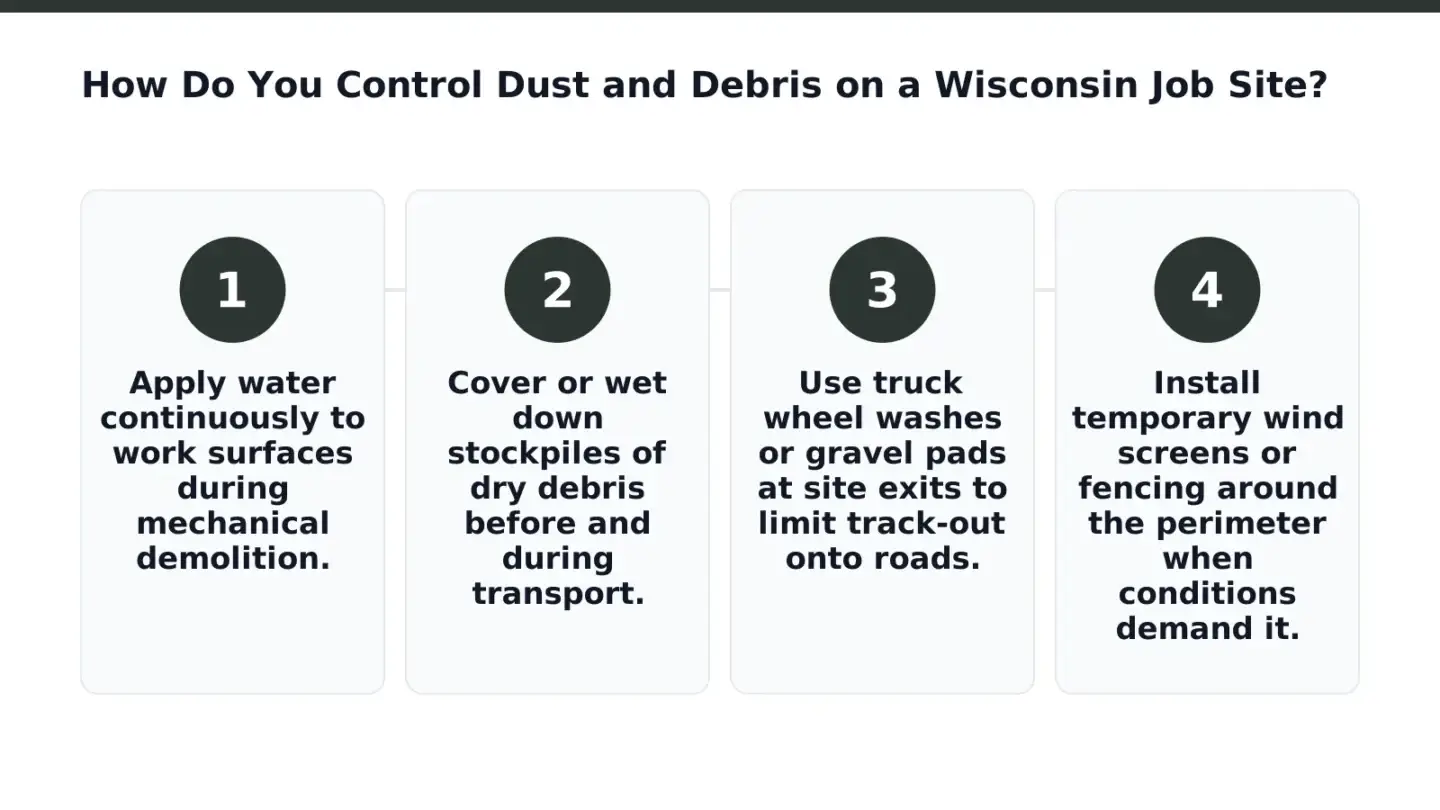
Professional crews use a layered strategy to keep dust contained. The process follows a clear sequence:
- Apply water continuously to work surfaces during mechanical demolition.
- Cover or wet down stockpiles of dry debris before and during transport.
- Use truck wheel washes or gravel pads at site exits to limit track-out onto roads.
- Install temporary wind screens or fencing around the perimeter when conditions demand it.
These safe residential demolition methods prevent particulate matter from drifting beyond the work zone. After the structure comes down, thorough post-demolition site cleanup removes remaining debris. A clean site sets the stage for safe, efficient new construction.
What Steps Ensure a Safe Full Teardown or Selective Demolition?
Safe demolition begins with a structured, step-by-step process. Full teardowns and selective demolition are core residential services available to Wisconsin property owners. Each project follows a clear sequence that protects workers, adjacent structures, and the surrounding environment.
What Happens Before Demolition Equipment Arrives on Site?
Preparation determines safety outcomes. The team secures all necessary permits and notifies local utilities to disconnect gas, water, and electric lines. A thorough site inspection identifies hazardous materials like asbestos or lead paint that require specialized abatement. The work area gets clearly marked and secured to prevent unauthorized access.
How Do Professionals Control Dust and Debris During a Teardown?
Fugitive dust control is a regulatory requirement in Wisconsin. Crews use water suppression systems to keep particulate matter from becoming airborne. Debris is sorted on site, with recyclable materials like concrete and metal separated from general waste. This approach reduces landfill volume and keeps the job site cleaner.
Safe residential demolition methods follow this sequence:
- Site assessment and utility disconnection. All service lines are confirmed dead before any structural work begins.
- Hazardous material abatement. Trained specialists remove asbestos, lead, or other dangerous substances under containment protocols.
- Structural bracing for selective demolition. When only part of a structure comes down, temporary supports protect the remaining sections.
- Systematic dismantling or mechanical teardown. Equipment operators work from top to bottom, pulling debris inward away from property lines.
- Debris sorting and site grading. Materials are separated for recycling or disposal, and the ground is leveled for the next phase.
HammerCore Group USA focuses on safe project execution and reliable workmanship across Wisconsin. The company helps homeowners, real estate investors, builders, and property managers safely remove unwanted structures while preparing properties for redevelopment. When a residential structure has reached the end of its useful life, safe and professional demolition becomes the first step toward creating new possibilities.
How Do You Avoid Common Mistakes and Costly Delays?
Avoiding demolition mistakes starts with hiring a licensed contractor. A licensed demolition contractor in Wisconsin ensures compliance with safety and local regulatory requirements. This single decision prevents fines, rework, and project shutdowns that derail timelines and inflate budgets.
What Planning Steps Prevent Demolition Delays?
Careful planning addresses Wisconsin’s unique challenges before work begins. Wisconsin weather, aging materials, and changing property needs create obstacles that surprise unprepared homeowners. A detailed site assessment identifies these risks early. The contractor then builds a schedule that accounts for seasonal weather patterns and material conditions.
Clear communication from start to finish prevents misunderstandings that cause delays. HammerCore Group USA structures every project around transparent updates and documented expectations. Homeowners receive a free quote that maps out scope, timeline, and cost variables. This eliminates guesswork and keeps the project moving on schedule.
How Does Proper Documentation Protect Homeowners?
Proper documentation establishes accountability at every project stage. The contract specifies demolition methods, debris removal protocols, and site restoration standards. Permits secured before demolition day avoid work stoppages. HammerCore Group USA provides free quotes so homeowners can plan their demolition budget accurately. A detailed written agreement protects against scope creep and unexpected charges.
Follow these steps to avoid common pitfalls:
- Verify the contractor’s Wisconsin license and insurance coverage before signing.
- Request a written project timeline with milestone dates.
- Confirm that all necessary permits are obtained before the start date.
- Document existing property conditions with dated photographs.
- Review the debris removal and site cleanup plan in the contract.
Wisconsin homeowners benefit from contractors who understand local regulations and environmental requirements. The Wisconsin DNR enforces fugitive dust control standards that apply to demolition activities. A qualified contractor manages these compliance obligations. For additional guidance on selecting the right professional, review the residential demolition guide for Wisconsin homeowners.
FAQ
What's the difference between mechanical demolition and deconstruction?
Mechanical demolition uses heavy equipment to bring down a structure quickly, with debris sorted afterward for recycling or disposal. Deconstruction takes a slower, selective approach, removing materials by hand so more of them can be salvaged or reused. Most Wisconsin residential projects rely on mechanical demolition for full teardowns, while deconstruction methods may apply to specific materials worth preserving.
What happens during the initial site assessment and free quote?
A licensed contractor inspects the property for asbestos, lead paint, and structural weaknesses, then maps out the scope, timeline, and cost variables before work begins. HammerCore Group provides this assessment as part of a free quote, giving homeowners a documented plan and clear pricing before any equipment arrives on site.
How is asbestos or lead paint handled during a teardown?
Trained specialists remove hazardous materials like asbestos and lead paint under containment protocols before structural demolition starts. This abatement step is required under Wisconsin regulations and protects both the crew and the surrounding property from contamination.
What happens to debris and materials removed from a demolished home?
Crews sort debris on site, separating recyclable materials such as concrete and metal from general waste. This reduces landfill volume and supports the environmental requirements the Wisconsin DNR applies to residential demolition sites.
Can selective demolition protect the parts of my home that stay standing?
Yes. Temporary structural bracing supports the remaining sections of a home while the targeted area, such as a damaged addition or failing wing, is removed. This keeps the untouched portions of the structure stable throughout the project.
Conclusion
Safe residential demolition methods in Wisconsin protect workers, neighboring properties, and the environment when executed by a licensed contractor who follows DNR dust control rules and OSHA compliance standards. Homeowners who verify credentials, secure permits, and document site conditions before work begins position their projects for smooth execution and predictable outcomes. Choosing a qualified professional who manages hazardous materials, controls debris, and communicates transparently turns an intimidating teardown into a controlled first step toward rebuilding.